
If you are renovating a period hallway, kitchen, or bathroom, it is easy to assume you have to choose between authentic heritage style and modern comfort. Traditional geometric floors look stunning, yet nobody wants to step onto ice-cold tiles on a January morning. The short answer is yes—Victorian floor tiles work remarkably well with underfloor heating. In fact, dense porcelain geometric tiles are one of the best surface materials you can pair with both electric and water-based (hydronic) heating systems. Here is why they perform so well, and what needs to be done properly beneath the surface so your floor lasts for decades.
Why Winckelmans Porcelain Tiles Are Ideal for Underfloor Heating
Not all period-style tiles behave the same way when warmed. Authentic unglazed porcelain tiles—such as the French-manufactured Winckelmans range we supply and install—are fired at very high temperatures, creating a dense, low-porosity body.
Excellent thermal conductivity: Because the clay body is dense and 9 mm thick, heat passes through the tile evenly and efficiently without trapping air pockets. Once warmed, the tiles hold their heat gently and radiate it across the room.
Dimensional stability: Unlike natural wood, which can expand, shrink, or gap over heating pipes, vitrified porcelain remains completely stable through seasonal temperature changes.
No risk to colour or finish: Because Winckelmans tiles are unglazed and full-bodied—meaning the colour runs all the way through the tile—gentle floor warmth will never craze a surface glaze or dull the finish.
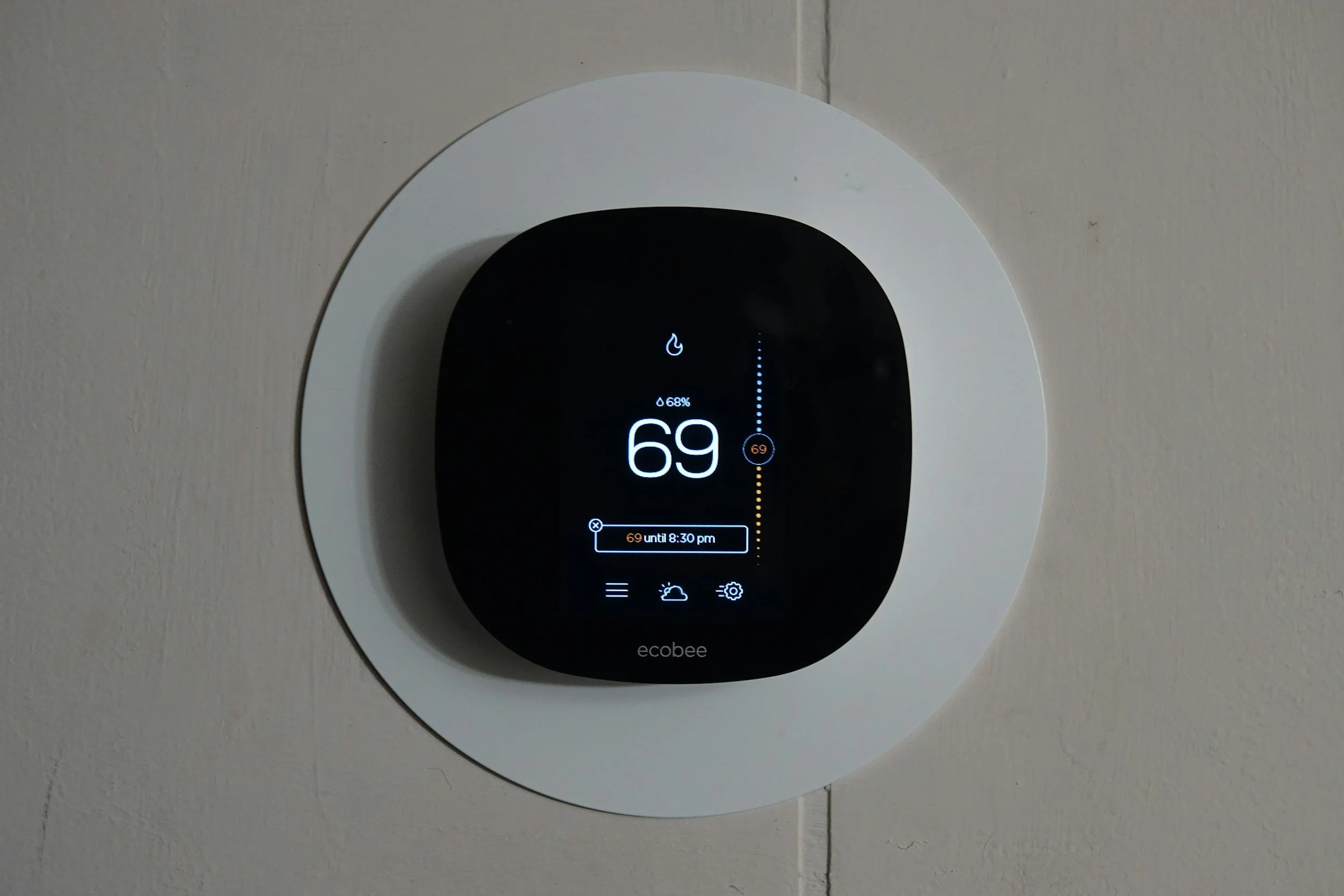
Keep Surface Temperatures Sensible
Electric vs. Water-Based Systems: Does It Matter?
Victorian geometric mosaics are compatible with both main types of underfloor heating, though each suits slightly different projects:
Electric heating mats: Often the simplest choice for smaller spaces such as hallways, cloakrooms, and bathrooms, where adding minimal floor height is essential. They warm up relatively quickly and pair cleanly with a decoupling membrane.
Wet (hydronic) systems: Usually preferred in larger ground-floor renovations—such as open-plan kitchens, garden extensions, or full downstairs refits—where the heating is integrated into the screed and run continuously at low water temperatures.
What Makes a Heated Mosaic Floor Succeed (or Fail)
Because Victorian patterns are made up of small individual pieces—triangles, squares, octagons, and border strips—with narrow grout joints, subfloor preparation is critical. Most issues with heated tiled floors have nothing to do with the tiles themselves; they happen in the layers underneath.
1. A Decoupling Membrane Is Essential
As a heated subfloor warms up and cools down, it undergoes microscopic lateral movement. Installing a quality uncoupling (decoupling) membrane between the heated substrate and the tiles absorbs that stress so it never transfers into your geometric pattern or causes hairline cracks along grout lines.
2. Flexible Adhesives and Grouts
Standard rigid cement-based products are not suitable over underfloor heating. Your tiler should use a deformable (S1 or S2 rated) flexible tile adhesive and a matching flexible grout engineered to tolerate thermal cycling without losing bond strength.
3. Gradual Commissioning (Never Switch It Straight to Full Heat)
Once installation and grouting are complete, the adhesive and grout need time to cure fully—typically at least 7 to 14 days, depending on the manufacturer's specification and substrate depth. When you turn the heating on for the first time, increase the temperature gradually by a few degrees per day rather than running the system at maximum output immediately.
4. Keep Surface Temperatures Sensible
For comfort, efficiency, and long-term material performance, floor surface temperatures beneath tiled finishes are generally kept around 25°C to 27°C (controlled via a dedicated floor sensor probe). That is more than enough to take the chill off the floor and create steady, comfortable background warmth.
Loose Tiles vs. Pre-Assembled Sheets Over Heating
Whether you choose individual loose tiles or pre-assembled mosaic sheets, both work seamlessly over underfloor heating. In intricate hallways or borders where an uncoupling membrane and levelling compound are already part of the build-up, sheeted designs also help your installer maintain crisp, consistent 2 mm joints across the entire heated area.
Planning a Heated Victorian Floor? See the Materials First
Choosing a geometric floor is a long-term decision, especially when you are combining it with underfloor heating and subfloor preparation. If you are planning a project this winter or spring, visit the Martin Mosaic showroom in West London to inspect our Winckelmans colour palette, feel the 9 mm thickness and natural unglazed texture firsthand, and discuss the right build-up for your subfloor. You can also explore over 1,000 classic designs in our Product Catalogue or get in touch with your room measurements for a free, tailored quotation—whether you need tiles supplied or a complete supply-and-fit service.