
The Edwardian vs. Victorian Tile: Understanding Your Period Home’s True Character
If you are lucky enough to live in a period property in West London, whether it is a classic townhouse in Richmond, a charming terrace in Chiswick, or an elegant villa in Kensington, you already know that these homes possess a unique soul. There is a distinct magic in the creak of the floorboards, the height of the ceilings, and, of course, the statement made by the hallway or front path. When it comes to restoring or elevating these spaces, tiled floors are often the crown jewel. But as you start exploring geometric patterns, you will quickly come across two main design philosophies known as Victorian and Edwardian. While they might seem similar at a fleeting glance, they tell completely different stories about the eras they came from. Let’s break down the differences in a simple, unpretentious way, so you can choose the perfect character for your home.
The Victorian Era (1837–1901): Rich, Bold, and Beautifully Intricate
The Victorians were not known for holding back. During Queen Victoria’s reign, the home was a grand showcase of status, taste, and industrial achievement.
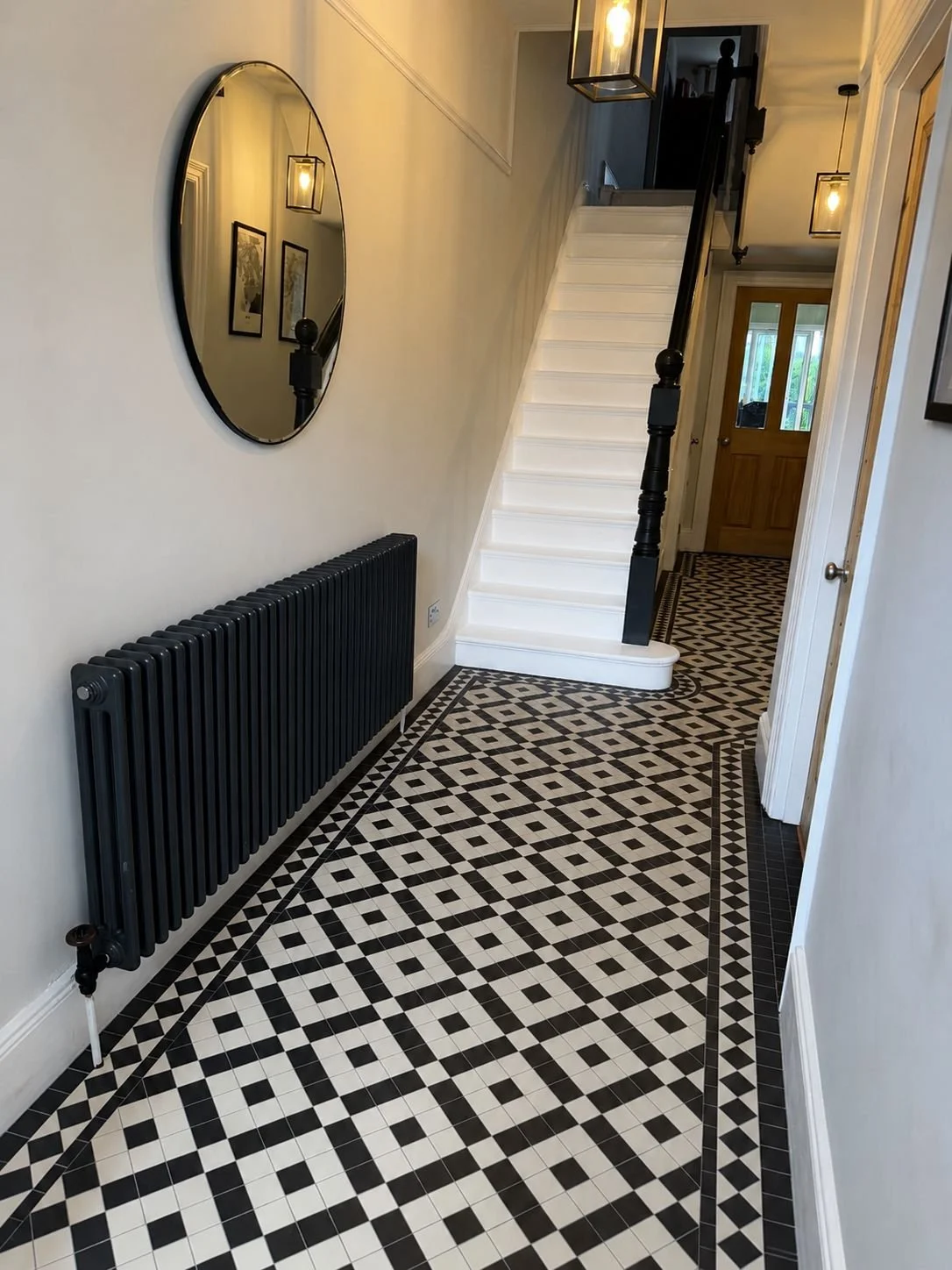
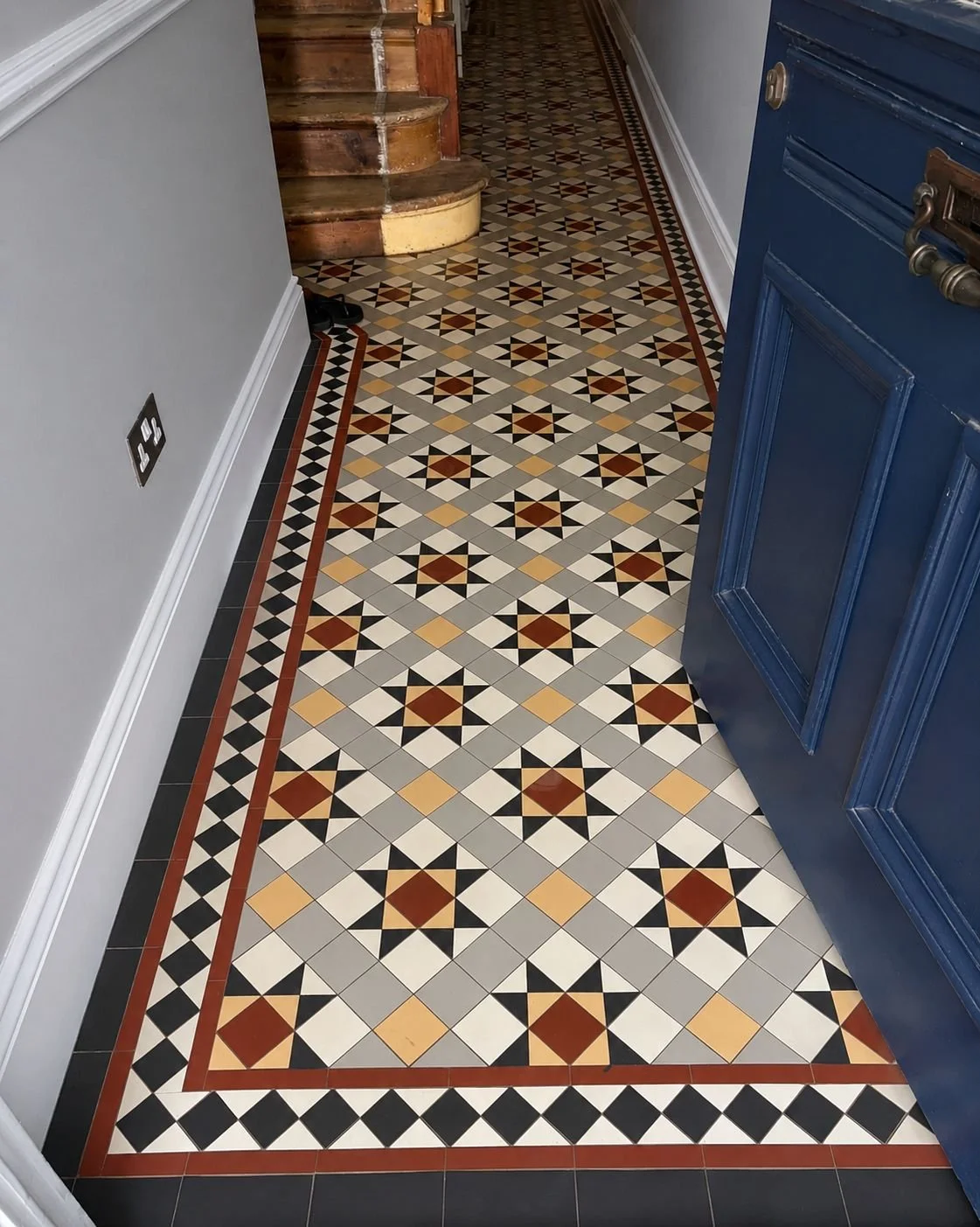
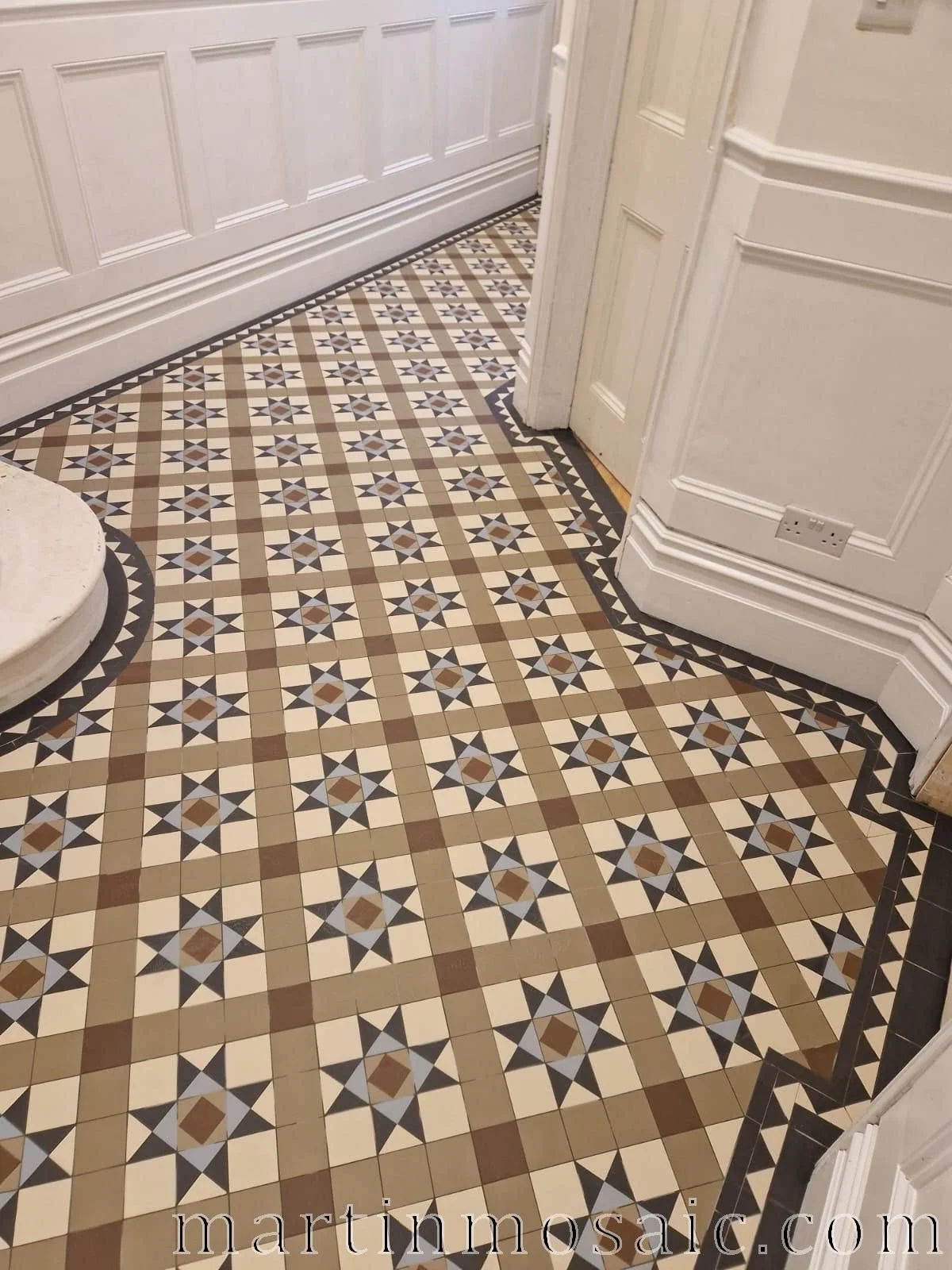
When you look at a classic Victorian tiled path or hallway, you are looking at a celebration of rich, deep tones and complex geometric puzzles.
The Palette: Think dramatic and deeply saturated. Victorian designs rely heavily on traditional encaustic colours like terracotta, deep blues, rich blacks, chocolate browns, and creamy whites.
The Patterns: Highly intricate. Victorian layouts love layers. They feature busy, repeating central fields framed by complex, multi-layered borders. Every square inch was an opportunity to showcase craftsmanship.
The Vibe: Stately, timeless, and intentionally grand. A Victorian path says that you are welcoming guests into a home of substance.
If your West London home has heavy plaster coving, dark wooden doors, and ornate cast-iron fireplaces, a traditional Victorian pattern, such as a classic Dorchester or Kingsley layout, will feel right at home.
The Edwardian Era (1901–1914): Light, Spacious, and Effortlessly Chic
When King Edward VII took the throne, the architectural mood shifted dramatically. People wanted to move away from the heavy, sometimes dark opulence of the Victorian years. They craved fresh air, natural light, and a sense of openness.
Edwardian tiles reflect this exact desire for simplicity and freshness.
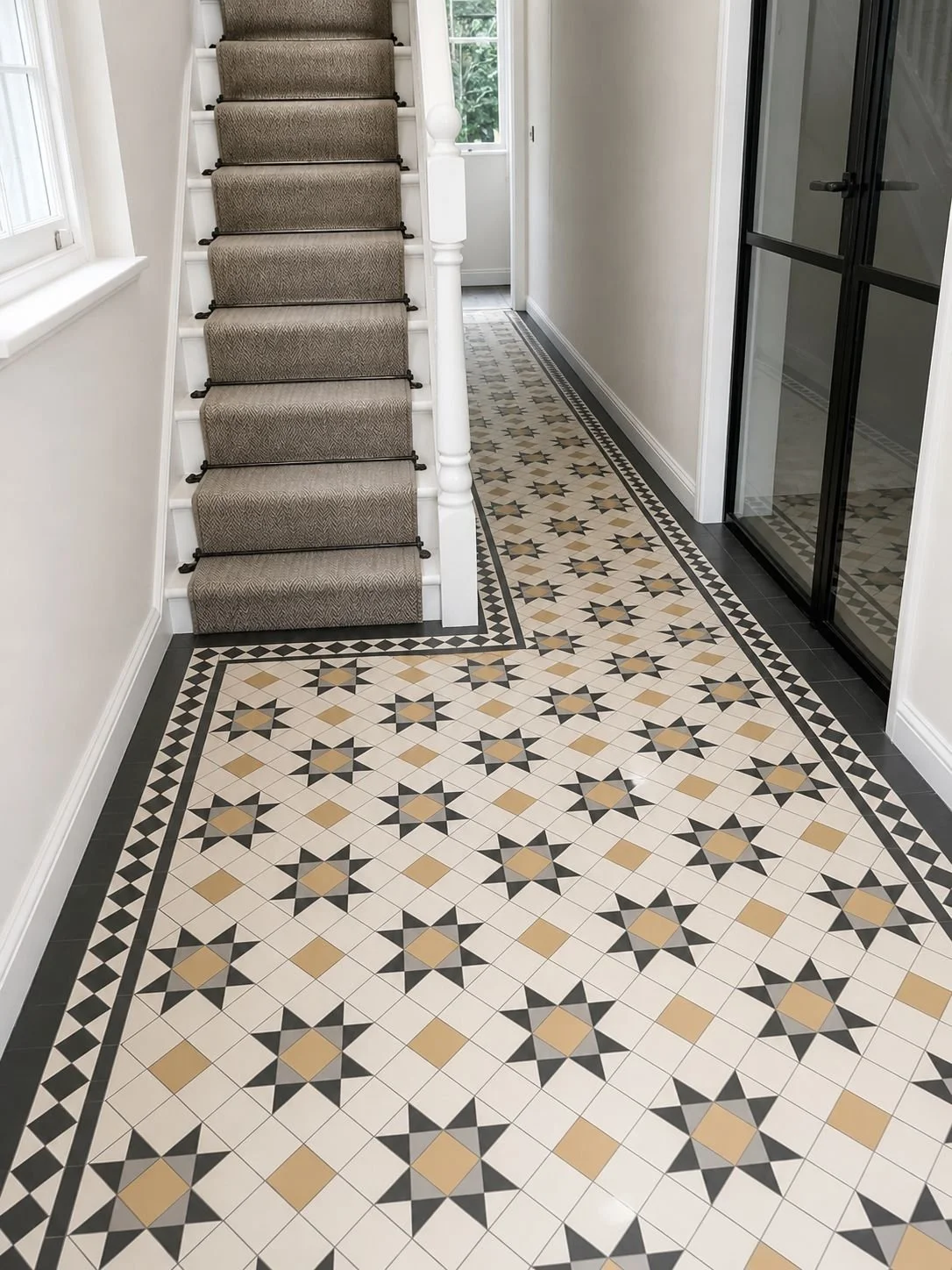
The Palette: The colours became noticeably lighter. While blacks and reds were still used, the Edwardians introduced softer tones. Pale greys, pastels, whites, and creams took center stage, making spaces feel instantly larger.
The Patterns: Breathing room. Instead of edge-to-edge intricate geometry, Edwardian designs opted for cleaner lines, larger individual tile shapes, and simpler checkerboard or grid formats. The borders became more straightforward, acting as a clean frame rather than a complex feature of their own.
The Vibe: Bright, airy, and effortlessly elegant. An Edwardian floor feels relaxed yet undeniably sophisticated.
If your property boasts large bay windows that flood the hallway with morning light, or if you prefer a more minimalist, contemporary interior style, an Edwardian approach will complement your taste perfectly.
Which One is Right for Your Project?
Here is the secret: you don't have to follow the history books to the letter. If you own a Victorian house but love clean, modern spaces, choosing a lighter, simplified Edwardian layout is a fantastic way to honor the property's history without making it feel like a museum. Conversely, adding a rich, complex Victorian path to an Edwardian home can give it a striking focal point that instantly commands attention from the kerb. The beauty of working with high-quality geometric tiles is their sheer versatility. Whether you want to recreate an exact historical masterpiece or put a fresh, modern twist on a classic design, it all comes down to choosing the right balance of colour, scale, and detail.
Unsure which era matches the vision for your hallway or front path? Pop into our world of mosaics and patterns so we can look at some samples together and find the exact rhythm that makes your West London home feel uniquely yours.